
The first waft of steam rising from a bowl of Easy Japanese Nabeyaki Udon Soup is enough to transport me to a cozy little eatery in Tokyo, where the flavors dance through the air like a familiar melody. This comforting dish combines thick, chewy udon noodles and a luscious dashi broth, creating a culinary embrace that’s perfect for chilly nights. What I love most is how effortlessly customizable this recipe is—whether you stick with traditional toppings like tempura shrimp and soft-cooked egg, or switch it up with gluten-free options or vibrant seasonal veggies, this soup is a crowd-pleaser. Not to mention, it’s quick to prepare, making it a wonderful addition to your weeknight menu. Are you ready to bring a taste of Japan into your kitchen?
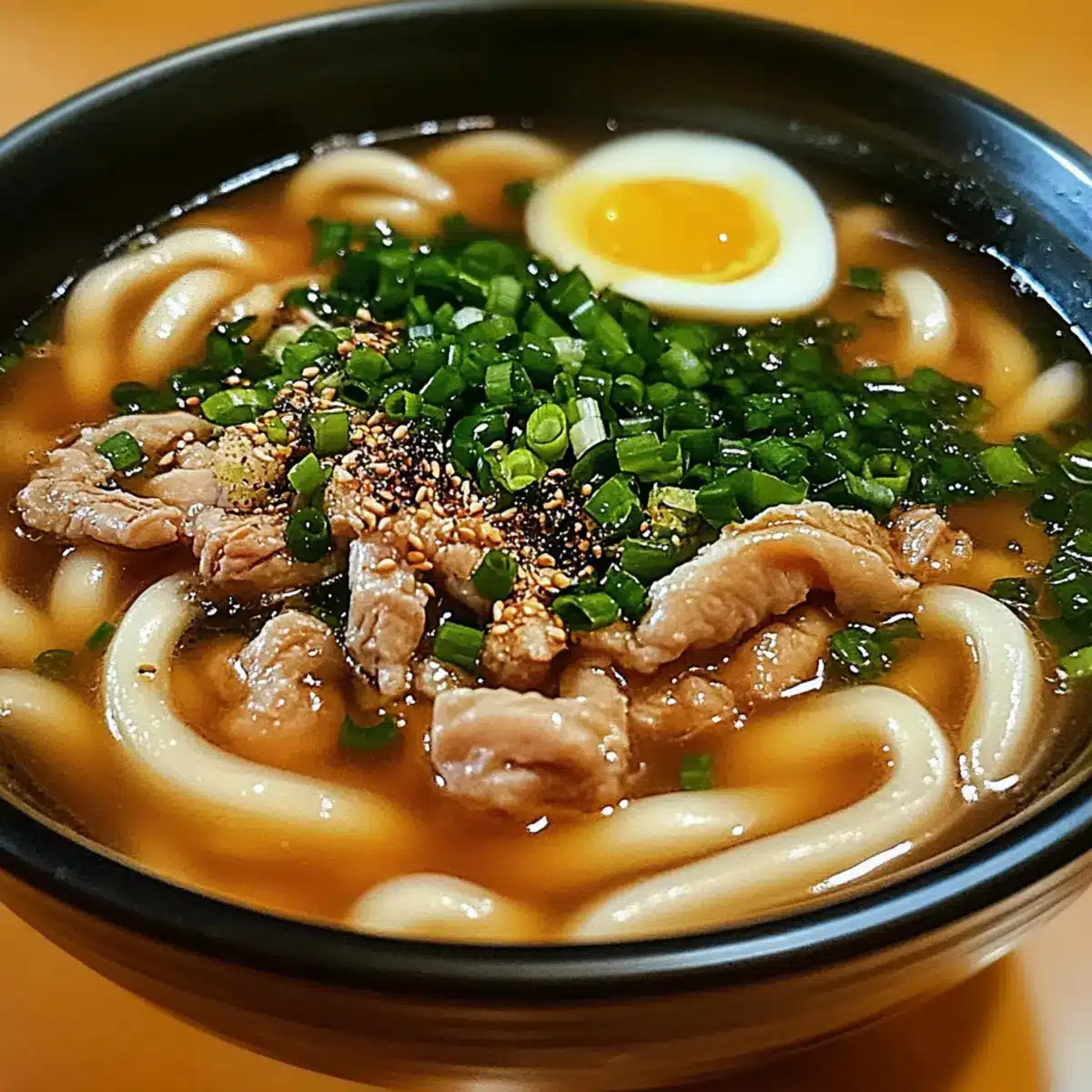
Why is Nabeyaki Udon Soup So Special?
Comforting warmth: This Easy Japanese Nabeyaki Udon Soup wraps you in a cozy embrace with its rich, savory broth. Quick to make: With straightforward steps, you can whip up this delicious dish in no time. Versatile toppings: Customize with your favorite proteins or vegetables, from tempura shrimp to tofu for a vegetarian twist. Umami explosion: Utilizing high-quality dashi and fresh ingredients, each bowl oozes with flavors that remind you of authentic Japanese cuisine. For more delightful dishes, check out my Gochujang Udon Noodles or explore comforting soups like Healing Chicken Soup.
Japanese Nabeyaki Udon Soup Ingredients
For the Broth
• Dashi stock – A rich, umami base that elevates the soup; always opt for high-quality dashi for the best flavor.
• Soy sauce – Brings depth and savory notes to the broth.
• Mirin – A sweet rice wine that adds a hint of sweetness to balance the flavors.
• Salt – Enhances all the other flavors present in the broth.
For the Noodles and Protein
• Udon noodles – Thick, chewy noodles that give this dish its characteristic heartiness.
• Tempura shrimp – Provides a crispy texture and richness; can swap with tempura fish or omit for a vegetarian option.
• Chicken thighs – Tender and juicy; for a vegetarian version, use tofu instead.
For the Vegetables and Garnish
• Shiitake mushrooms – Adds an earthy flavor; feel free to mix in other mushrooms for added variety.
• Green onions – Freshly chopped for garnish and a burst of flavor.
• Spinach – Optional, but it adds extra nutrition and color.
• Kamaboko (fish cake) – Traditional topping that adds flavor; it’s also optional.
Step‑by‑Step Instructions for Easy Japanese Nabeyaki Udon Soup
Step 1: Prepare the Broth
In a medium saucepan, combine 4 cups of high-quality dashi stock, 2 tablespoons of soy sauce, 1 tablespoon of mirin, and a pinch of salt. Place over medium heat and bring to a gentle simmer for 3–4 minutes, stirring occasionally. The broth should emit a fragrant aroma, inviting warmth that sets the tone for your Japanese Nabeyaki Udon Soup.
Step 2: Cook Proteins
In a skillet over medium-high heat, add a splash of oil and sear 2 chicken thighs for 4–5 minutes on each side until they achieve a golden-brown color. Once browned, add 1 cup of sliced shiitake mushrooms and sauté for an additional 2–3 minutes until the mushrooms are tender. This will provide a flavorful protein base for the enticing udon soup.
Step 3: Cook Noodles
In a separate pot, bring 6 cups of water to a rolling boil. Add 12 ounces of udon noodles and cook for 2–3 minutes until they are chewy yet tender, stirring gently to prevent sticking. Once cooked, drain the noodles and rinse them briefly under warm water to stop the cooking process, ensuring they maintain their delightful texture.
Step 4: Assemble the Soup
Divide the cooked udon noodles evenly into serving bowls. Ladle the hot dashi broth over the noodles, allowing the rich flavors to soak into them. Layer the sautéed chicken and mushrooms on top of the noodles in each bowl, creating a hearty base for your Easy Japanese Nabeyaki Udon Soup.
Step 5: Add Toppings
Carefully place tempura shrimp on top of each bowl and crack a soft-cooked egg into the center. Once assembled, cover each bowl with a lid and let sit for 1 minute to allow the egg to set slightly, enhancing the creamy texture of this comforting soup.
Step 6: Garnish & Serve
Before serving, sprinkle each bowl with freshly chopped green onions and add a handful of optional spinach or slices of kamaboko for added flavor. Serve your Easy Japanese Nabeyaki Udon Soup immediately, allowing everyone to enjoy a warm and fulfilling bowl of deliciousness.
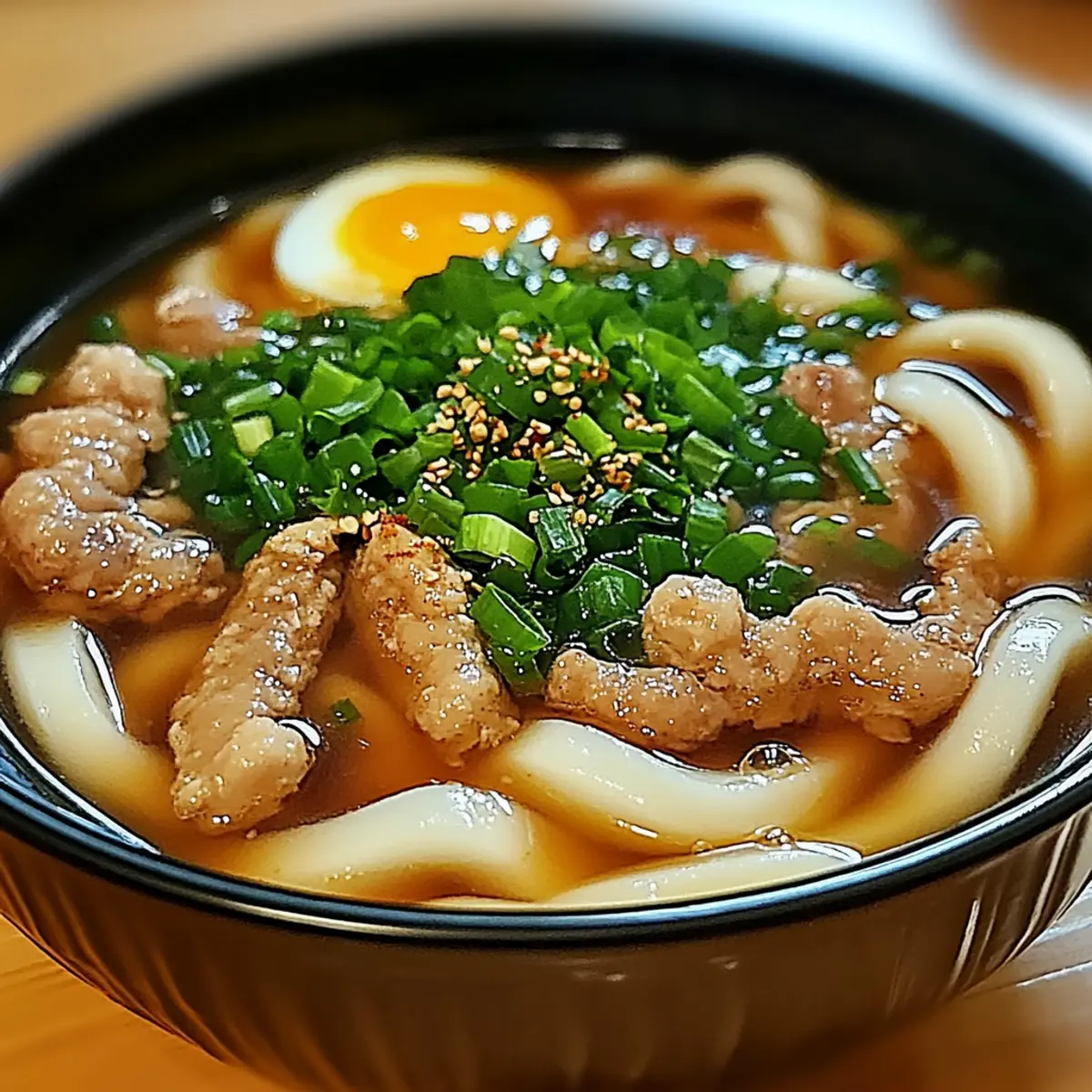
Expert Tips for Japanese Nabeyaki Udon Soup
-
Dashi Quality Matters: Always choose high-quality dashi stock for a rich and flavorful broth; it sets the foundation for a truly delicious Japanese Nabeyaki Udon Soup.
-
Perfect Noodle Texture: Avoid overcooking your udon noodles to keep them chewy; rinse briefly under warm water after boiling to maintain their perfect texture.
-
Storing Leftovers: To prevent the noodles from becoming mushy, store the broth and noodles separately in airtight containers for optimal freshness.
-
Fresh Toppings: Prepare optional toppings like tempura shrimp or spinach fresh right before serving to ensure they retain their delightful texture and flavor.
-
Experiment with Variations: Feel free to personalize your Japanese Nabeyaki Udon Soup by adding seasonal vegetables or protein alternatives that suit your taste.
Make Ahead Options
These Easy Japanese Nabeyaki Udon Soups are perfect for meal prep enthusiasts looking to save time on busy weeknights! You can prepare the broth and cook the proteins up to 3 days in advance; simply refrigerate them in airtight containers. Make sure to store the udon noodles separately to maintain their texture. When you’re ready to enjoy your comforting soup, reheat the broth gently and add the cooked udon noodles back in. Top with fresh tempura shrimp and a soft-cooked egg just before serving, ensuring everything is hot and fragrant. This way, you can have a delicious, gourmet meal with minimal prep on the day of serving!
Storage Tips for Japanese Nabeyaki Udon Soup
Fridge: Store leftover soup in airtight containers for up to 3 days, keeping the broth separate from the noodles and toppings to maintain texture.
Freezer: The broth can be frozen in portions for up to 2 months. Store it in freezer-safe containers or bags for easy thawing.
Reheating: To reheat, thaw the broth overnight in the fridge, then gently warm it on the stove. Add fresh noodles and toppings just before serving for the best results.
Leftover Noodles: If you have extra cooked udon noodles, toss them with a small amount of oil to prevent sticking before storing them in the fridge for up to 2 days.
What to Serve with Easy Japanese Nabeyaki Udon Soup
The warmth of a steaming bowl can be beautifully complemented with just the right sides and treats, elevating your mealtime experience.
-
Light Salad: A crisp garden salad with a zesty dressing can provide a refreshing contrast to the savory richness of the soup. It balances flavors and adds a refreshing crunch.
-
Tempura Vegetables: Crispy tempura veggies, like zucchini or sweet potatoes, echo the shrimp’s textures while adding a delightful crunch. These golden bites are great for dipping into the broth.
-
Steamed Bok Choy: Lightly steamed bok choy adds a tender, slightly sweet green element that enhances the comfort of your udon soup. The bright color also adds visual appeal.
-
Rice Balls (Onigiri): These flavorful rice balls, filled with umeboshi or tuna, make a perfect pairing. They are fun to eat and complement the soup’s heartiness deliciously.
-
Japanese Pickles: Serve with a small side of tsukemono (Japanese pickles) to introduce sharp, tangy flavors that cut through the richness of the broth. Their crunch adds an intriguing texture, brightening each sip.
-
Green Tea: A cup of warm green tea offers a soothing finish, cleansing the palate while enhancing the meal’s authentic Japanese experience. Its earthy notes work beautifully with the umami of the soup.
-
Chocolate Mochi: As a satisfying dessert, a soft mochi filled with chocolate or red bean offers a sweet and chewy contrast to the meal. It’s a delightful way to end your culinary journey!
Japanese Nabeyaki Udon Soup Variations
Embrace your creativity with this Easy Japanese Nabeyaki Udon Soup and make it uniquely yours!
-
Vegetarian: Swap chicken and shrimp for tofu and extra mushrooms, enhancing flavor with miso for an earthy touch.
Dive into a bowl full of plant-based goodness, where the umami hits the spot without any meat. -
Spicy Kick: Add chili oil or gochujang for a vibrant heat that tantalizes the taste buds.
Picture the warmth radiating through each sip as you experience a delightful kick that elevates the dish. -
Seafood Delight: Use tempura fish or fresh scallops instead of shrimp for a coastal twist on flavor.
This seafood variation introduces a delicate freshness, splendidly complementing the comforting broth. -
Gluten-Free: Substitute udon with rice noodles to craft a gluten-free version that everyone can enjoy.
Revel in the same rich flavors and textures while making this dish approachable for all dietary needs. -
Extra Veggies: Incorporate seasonal vegetables like bok choy or carrots for a colorful and nutritious upgrade.
Each addition brings a pop of color and crunch, transforming your soup into a beautiful medley. -
Egg Alternatives: Use soft-boiled quail eggs or avocado slices instead of standard eggs for a creative spin.
Imagine the creamy avocado mingling with each flavorful bite, adding indulgence to your bowl.
For more delicious inspirations, check out my healthful Jamaican Chicken Soup or satisfy your cravings with Japanese Katsu Bowls.
Easy Japanese Nabeyaki Udon Soup Recipe FAQs
What kind of dashi stock should I use for the soup?
Absolutely! For the best flavor, use high-quality dashi stock, which can be found in most Asian grocery stores or online. If you’re short on time, instant dashi powder is a convenient alternative that can also yield good results. Just be mindful to follow the ratio on the package for the right flavor intensity.
How should I store leftover udon soup?
The more, the merrier! To keep your soup fresh, store it in airtight containers. It’s best to separate the broth from the noodles and toppings to prevent them from becoming mushy. The broth can be refrigerated for up to 3 days and still taste delicious. If you want to keep it longer, the broth can be frozen for up to 2 months.
Can I freeze the udon noodles used in this soup?
While you can freeze the broth, it’s better not to freeze udon noodles after cooking, as they can lose their unique chewy texture. If you have leftover cooked noodles, I’d recommend tossing them lightly in oil to prevent sticking and storing them in the fridge for up to 2 days. For freezing, it’s best to store them uncooked for future use.
How can I customize my Japanese Nabeyaki Udon Soup for dietary restrictions?
Very! This recipe is fantastic for customization. For a vegetarian version, simply replace the chicken and tempura shrimp with tofu and additional mushrooms, like enoki or maitake, and use miso to enhance the flavor. For gluten-free options, substitute udon with rice noodles or gluten-free noodles. Just keep an eye on cooking times to ensure they don’t get mushy!
What should I do if I overcook my udon noodles?
No worries at all! If you’ve unknowingly overcooked your udon noodles, rinse them under cold water immediately to stop the cooking process. If they’ve already turned mushy, consider using them in a stir-fry or another dish instead of the soup, as they might not hold up well in the broth anymore.
How do I prevent my soup ingredients from becoming soggy when reheating?
I often make this part easy! When reheating, gently warm the broth on the stove, and add fresh, uncooked udon noodles or fresh toppings just before serving. You can also lightly sauté any vegetables to retain their firmness. This way, everything will stay delightful and not lose that wonderful texture!
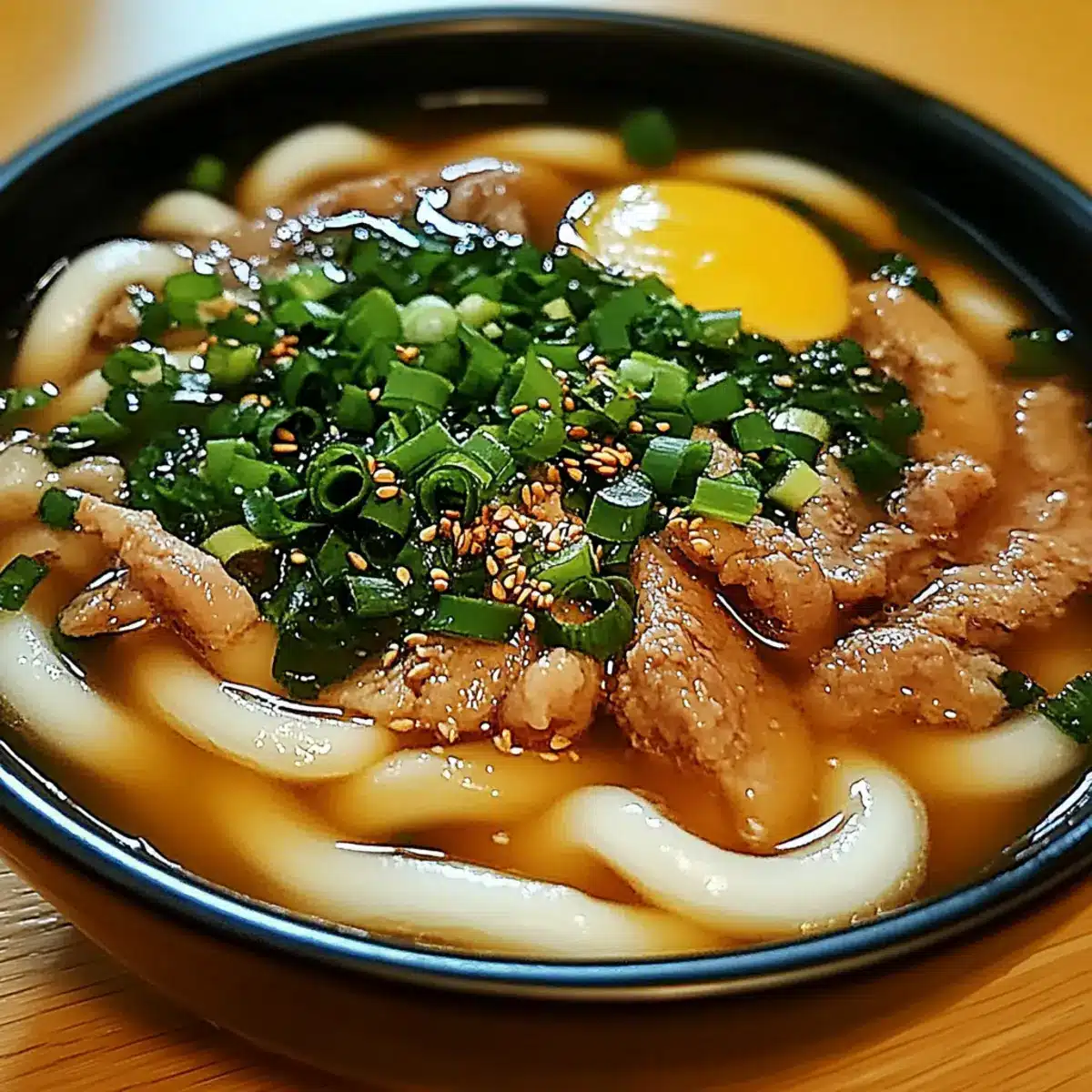
Cozy Japanese Nabeyaki Udon Soup for Heartwarming Nights
Ingredients
Equipment
Method
- In a medium saucepan, combine dashi stock, soy sauce, mirin, and salt. Bring to a gentle simmer for 3–4 minutes.
- In a skillet, sear chicken thighs over medium-high heat until golden brown, then add sliced shiitake mushrooms and sauté until tender.
- In a separate pot, boil water and cook udon noodles for 2–3 minutes, then drain and rinse with warm water.
- Divide the cooked udon noodles into bowls and ladle hot dashi broth over them. Top with sautéed chicken and mushrooms.
- Place tempura shrimp and a soft-cooked egg on top of each bowl. Cover with a lid and let sit for 1 minute.
- Garnish with green onions and optional spinach or kamaboko, then serve immediately.
Leave a Reply